

Buying a diamond shouldn't feel like a gamble. You deserve sparkle that matches your values, not a hidden supply chain.
Many shoppers discover that most diamonds are sourced without clear labour or environmental standards. That gap can turn a joyous purchase into a guilty feeling.
Start by asking three simple questions: Who mined the stone? Does the seller provide a Kimberley Process or independent audit? Are the profits reinvested in community projects?
A practical way to check is to look for certifications like the Responsible Jewellery Council. Cervin Blanc, for example, lists its ethical sourcing on each product page, and our diamond helix earrings guide walks you through the details.
While you plan your purchase, consider the whole luxury experience. Fresh skin helps jewellery sit comfortably, so many style‑savvy women pair their new ring with a premium facial. Sade Skin provides luxury skincare that complements fine jewellery.
Follow these steps and you’ll walk into any boutique confident that your diamond is as clean as its cut. That peace of mind is the true sparkle you’re after.
Understanding Ethical Diamond Standards
When you pick a diamond, you’re not just buying sparkle – you’re buying a story. A good story starts with clear standards, not vague promises.
Look for the Kimberley Process certification first. It tells you the stone didn’t fund conflict. Then check if the jeweller follows the Responsible Jewellery Council’s code. Those audits show real labour and environmental checks.
Many brands also share an independent lab report. It’s a simple PDF that lists the mine, the chain of custody, and any community projects the profit supports. If you can see that, you’ve got a solid baseline.
But standards go deeper than paperwork. Some designers, like those at Cervin Blanc, add a traceable QR code on the back of the box. Scan it, and you see the exact mine, the year it was extracted, and the steps taken to protect local wildlife.
Want a quick way to see how other ethical minerals are treated? Check out this guide on pyrite metaphysical properties – it shows how transparency can apply across the board.
And remember, your values can echo in every habit. Even choosing clean‑label nutrition, like Great Bite Supplements, aligns with a broader ethical lifestyle.
In practice, write down three things before you buy: the certification, the audit source, and the community impact. Keep that list on your phone – it’s your quick cheat sheet when you walk into a boutique.
Watch this short video for a visual walk‑through of how to read a diamond’s provenance report.
Seeing the report side by side with the stone helps you feel confident that the sparkle matches your values.
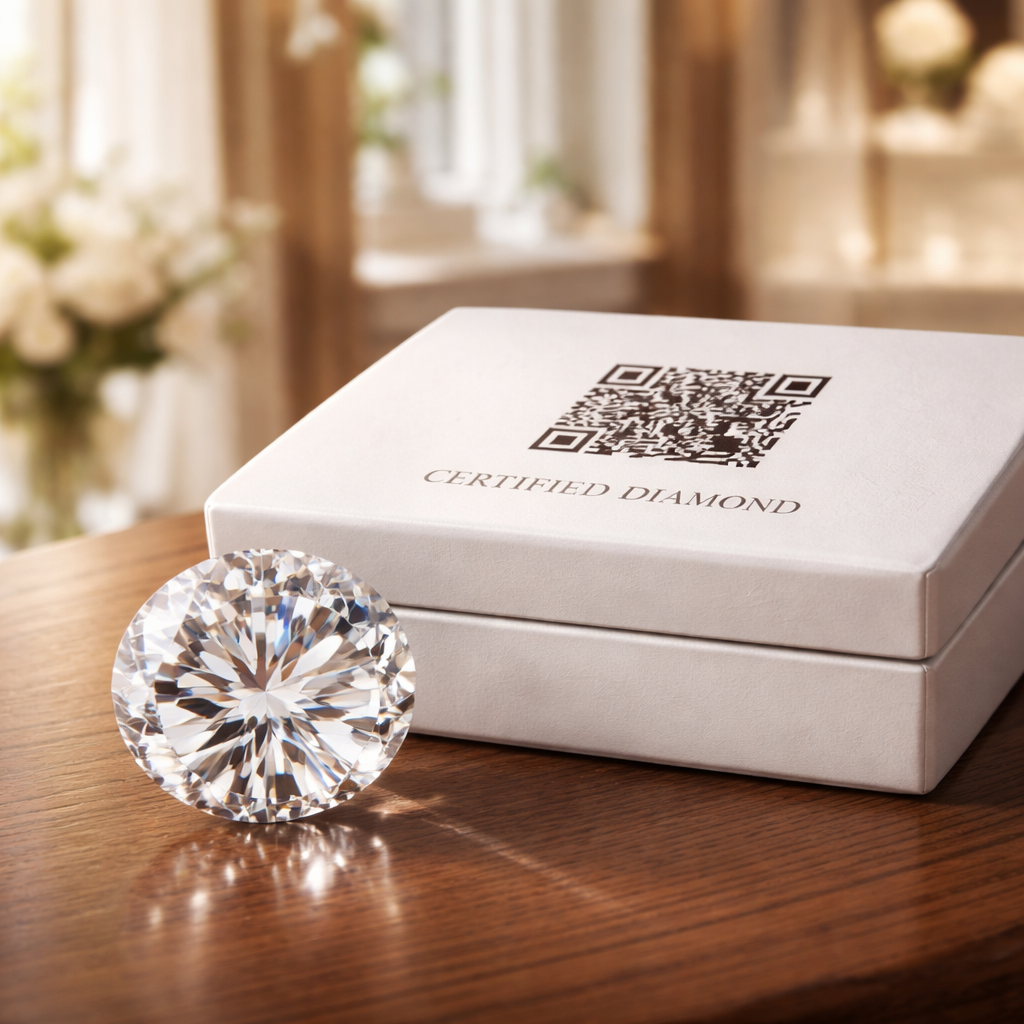
Step 1: Research Certified Suppliers
First thing you do in this guide to buying ethical diamonds is to verify who the seller really is. A name on a box means little if you can’t see proof.
Look for recognised certificates
Start with the Responsible Jewellery Council (RJC) badge or a Kimberley Process certificate. Those marks show an independent body has checked the mine, labour and environment.
Match the details to the piece
When you spot a badge, note the certificate number. Then visit the certifier’s public database. Enter the number to see the audit date, mine name and country of origin.
Check the product tag
Take a photo of the jewellery tag or online page. Compare the listed origin, weight and cut to the data from the database. If anything looks off, ask for the latest audit report.
Use QR codes and blockchain
Swiss and UK boutiques now add a QR code that links to the blockchain record. Cervin Blanc, for example, tags each piece with the RJC logo and a QR code that points to the same public ledger. Scanning it on your phone shows the same steps you just checked, but in real time.
Ask the right questions
Don’t be shy. Ask the seller: “Can I see the full audit report?” and “What percentage of the sale goes back to the mining community?”
If the answer is vague, move on. Ethical buying is about confidence, not compromise.
By doing this research, you turn a sparkle into a promise you can wear without doubt. You can also check trade association lists for Swiss or UK members. Those lists show which workshops hold current RJC status and which are flagged for non‑compliance. A quick glance can save hours of digging.
Step 2: Verify Lab‑Grown vs Mined Origins
Lab‑grown and mined diamonds each have a different story. Knowing which story fits your values saves you time and doubt.
1. Scan the certificate number
Take the number on the jewellery tag and type it into the certifier’s public database. Look for the audit date, mine name and country. If the record shows “lab‑grown” or lists a lab location, you’ve got a lab stone. If it shows a mine name such as Botswana or Canada, it’s natural.
2. Ask about the energy source
Many labs run on coal‑heavy grids, especially in China. A responsible seller will tell you if the lab uses renewable power. If they can’t answer, walk away.
3. Check resale outlook
Natural stones usually keep value because they’re finite. Lab‑grown diamonds can lose price as more are produced. Ask the seller for a resale estimate or look at recent market data.
| Feature | Lab‑grown | Mined |
|---|---|---|
| Origin proof | Lab name, batch report | Mine name, country, audit date |
| Energy impact | Often high CO₂ if fossil‑fuel power | Varies, but many mines use renewable practices |
| Resale value | Limited, price may drop | Generally holds or rises |
Here’s a quick tip: a brand that publishes the full lab report on its site, like the guide on lab‑grown vs natural diamonds from Gardens of the Sun, makes verification painless.
Another handy habit is to compare price per carat. ECI Jewelers notes that lab‑grown stones can be 30‑50 % cheaper for the same 4Cs, which helps you decide if the cost saving outweighs any resale concerns.
Put these steps together, and you’ll know exactly what you’re holding before you sign the contract.
Step 3: Assess Pricing and Value
Now that you know where the stone comes from, it’s time to look at the price. A lower tag doesn’t always mean a better deal.
Check the price per carat
Take the total price and divide it by the carat weight. This gives you a clear baseline you can compare across sellers. If a lab‑grown diamond shows £4,000 per carat and a mined stone shows £7,500, you see the saving right away.
Ask about resale outlook
Natural stones tend to hold or even rise in value because there’s a limited supply. Lab‑grown stones can drop as new batches hit the market. Ask the seller for a recent resale estimate or look at auction results for similar sizes.
Factor in hidden costs
Some retailers add extra fees for setting, certification or insurance. Write these down and add them to your per‑carat figure. A small extra charge can tip the balance.
Balance cost vs values
Think about why you’re buying. If you want a piece you’ll wear every day and care more about sparkle than future profit, a lower price per carat might be worth it. If you plan to pass the ring down as an heirloom, the long‑term value of a mined stone could matter more.
Tip: make a quick spreadsheet with columns for carat, price, extra fees, and estimated resale value. Seeing the numbers side by side helps you decide if the saving outweighs any potential loss later.
When you finish this step, you’ll have a real sense of whether the price matches the value you expect. That confidence is the last piece of the guide to buying ethical diamonds.
Step 4: Evaluate Return Policies and After‑Care
You've done the math, you know the stone's story – now make sure the shop backs you up if things go sideways. A solid return policy and a clear after‑care plan keep the sparkle alive long after the ring sits on your finger.
Return policy checklist
- Ask how many days you have to return or exchange. A 30‑day window is common; anything less can bite.
- Check if the seller charges a restocking fee. If they do, ask for the exact percent.
- Find out who pays for return shipping. Some boutiques cover it, others make you foot the bill.
- Read the warranty language. Does it cover loose settings, metal wear, or only the diamond?
- Make sure the policy is written, not just spoken. A PDF or webpage gives you proof.
After‑care is the next piece of the puzzle. Diamonds are tough, but they still need love.
Everyday after‑care tips
Store each piece in a soft pouch or padded box, separate from other jewellery, so scratches don’t happen. Avoid wearing your rings when you’re doing rough work or hitting the gym – a sudden bump can bend a setting.
Cleaning is simple: a few drops of mild dish soap in warm water, a soft toothbrush, and a gentle rub. Rinse well and pat dry with a lint‑free cloth. The same routine is recommended in a diamond cleaning guide. Keep perfume, hairspray, or chlorine away from your pieces; those chemicals can dull the metal and even affect coloured stones.
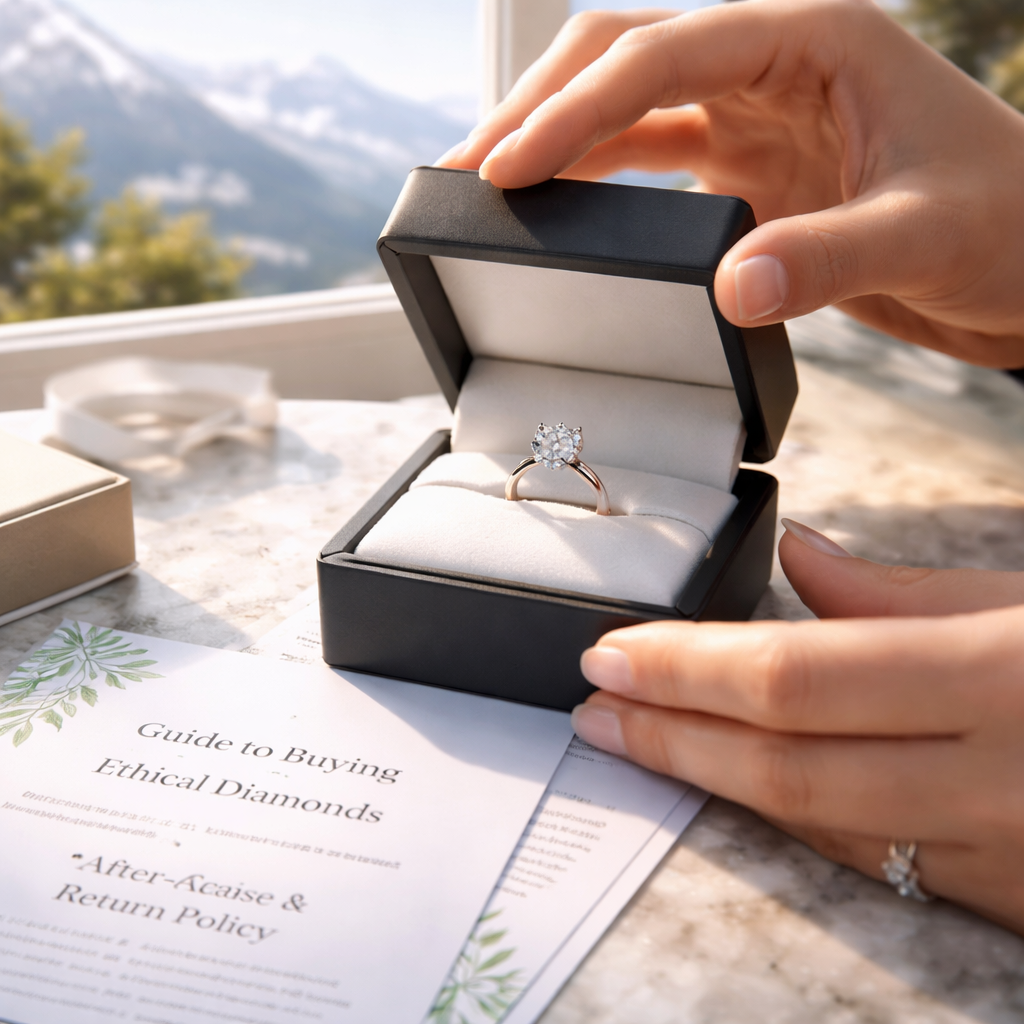
Before you sign anything, write down the key dates and fees on a note‑taking app. If the numbers line up with what you expect, you’ve locked in a purchase you can enjoy for years without surprise.
Conclusion
Now you’ve walked through the whole guide to buying ethical diamonds. You know how to spot a real certificate, how to tell lab‑grown from mined, how to weigh price against true value, and how to lock in a safe return policy.
What’s the next step? Grab a shortlist of Swiss or UK sellers that show RJC badges and clear audit links. Take a photo of the tag, check the number online, and ask for the QR code. If the answers feel solid, you’ve cut through the noise.
Remember, the sparkle you wear should match your values. A piece from Cervin Blanc blends Swiss design with transparent sourcing, so you get style without a guilty feeling.
Take a moment now to note the key dates, fees, and care tips in your phone. A quick check before you sign means you’ll enjoy your ring for years, not worry about hidden catches.
FAQ
How do I check if a diamond’s certificate is real?
First, copy the certificate number from the tag or the online page. Then go to the certifier’s public database, many agencies let you type the number in. Look for the exact weight, cut, and origin that match your stone. If the record is missing or the details differ, ask the seller for a fresh audit report. A real certificate will line up with the database entry.
What does the RJC badge tell me about a jeweller?
The Responsible Jewellery Council badge means the brand follows a set of rules about people, planet, and honesty. It shows an independent audit has checked the mine, the labour conditions, and the environmental impact. Look for a link or QR code that leads to the latest audit. If the badge is there but you can’t find proof, move on. That extra check gives you confidence your purchase aligns with your values.
Are lab‑grown diamonds really a greener choice?
Lab‑grown stones can cut down mining impact, but the energy they use matters. If the lab runs on renewable power, the carbon footprint stays low. Ask the seller for the lab’s energy source or a sustainability report. Compare that info with a natural mine that has strong environmental policies. In many cases, a lab stone from a green lab beats a mine that still uses fossil fuels.
What should I look for in a return policy?
Check how many days you have to send the piece back, 30 days is common, but some shops give 60. Find out if you’ll pay for return shipping or if the seller covers it. Look for any restocking fee and how it’s calculated. Make sure the policy is written down on a PDF or web page so you have proof. A clear policy protects you if the ring doesn’t fit or the stone isn’t as described.
How can I compare prices without sacrificing ethics?
Start by calculating price per carat for each option. Then line up the certificate details, a higher price may mean a better audit or a mine that gives back to its community. Use a simple spreadsheet: column A for carat, B for price, C for fees, D for ethical score you give based on the audit. The cheapest per‑carat stone that also ticks the ethical boxes is often the best deal.
Where can I find trustworthy Swiss or UK sellers?
Look for shops that display the RJC badge and link to the audit on their site. Many Swiss boutiques put a QR code on the box that opens a public ledger. In the UK, reputable dealers often list the Kimberley Process number on the product page. A quick search of the badge plus the brand name usually brings up the latest certification.