

Picture this: you’re standing in a Zurich gallery, the light catching on a set of slender, spiraling diamonds that seem to echo the curves of the Alps themselves. That’s the vibe of a pair of diamond helix earrings – a modern twist on the classic helix that feels both timeless and daring.
But why are they suddenly the go-to choice for brides on the hunt for something that’s a little less conventional than a pearl but still carries that undeniable sparkle? The answer lies in how the helix shape frames the diamond. Think of it as a gentle, natural loop that guides the eye, amplifying the cut and giving the stone a sense of movement even when you’re just walking to the coffee shop.
So, what’s the first step if you’re curious about adding a helix to your collection? Start by asking: what setting will best showcase your personal style? For a wedding look, a subtle halo around the diamond can add a whisper of drama without overpowering the rest of your dress. For everyday wear, a single-stone helix in 18‑carat gold will keep things sleek yet striking.
In our experience, the right helix can actually be a conversation starter. Last winter, a client in London paired her new helix studs with a minimalist silk blouse and a vintage clutch. Her friends kept asking which jeweller she’d found the pieces at—so the helix was not just an accessory, it was an opening for stories and connection.
Before you make a purchase, check the four Cs of the diamond—cut, colour, clarity, and carat—because helix earrings amplify even the smallest imperfections. A well‑cut diamond will sparkle through the curve, while a slightly lower colour grade can add a warm glow that feels less expensive but still gorgeous. And remember: a helix can be a subtle reminder that beauty comes in shapes, not just sizes.
Curious about how to choose the perfect pair? Dive deeper into our guide on picking the right diamond earrings and let us walk you through the nuances of style, metal, and care.
Once you’ve got your helix, keep it looking fresh with simple maintenance: a quick wipe with a soft cloth after each wear, and a monthly soak in warm, mild soap water to keep the metal shine. And if you’re a DIY enthusiast, you might enjoy exploring how different beads complement diamond jewelry—check out this handy guide on gemstone beads in the UK for ideas that pair beautifully with your new helix.
So, are you ready to let those helix earrings twirl with every step you take? It’s more than a fashion statement; it’s a tiny piece of Swiss design that tells a story of elegance, innovation, and a touch of daring.
What are diamond helix earrings? Design and terminology
If you've ever caught a glint along the edge of the ear and wondered what that delicate curve is, you're not imagining things. Diamond helix earrings are a sculptural take on the classic hoop, designed to skim the outer rim of the ear. They catch light as you move, giving a look that's at once modern and timeless.
At their heart, they follow a gentle spiral along the helix, the curved rim that starts near the temple and wraps toward the top of the ear. Diamonds ride along that curve, either as a single stone perched on the curve or as a seamless row.
Design vocabulary: terms you’ll hear
When you shop, you’ll hear specific terms designers and retailers use to describe the look. Here are the most common ones you’ll encounter.
- Pavé helix: tiny diamonds set tightly along the curve for continuous sparkle.
- Halo-helix: a small central diamond framed by a ring of pavé along the curve.
- Bezel-set along the curve: each diamond encased in a thin metal rim for protection and a clean silhouette.
- Prong-set on the arc: delicate prongs holding a larger centerpiece while keeping light free to pass through.
Common settings and shapes
Solitaire on the helix is a single diamond that traces the curve, simple but striking. Pavé-helix uses a continuous line of stones for a crowded, twinkling effect. Halo-helix places a central sparkle within a halo that catches the eye as you turn your head. These approaches let the same piece read differently depending on the metal finish and the scale of the stones.
Materials matter. Most diamond helix earrings in our range are crafted in 18k gold—yellow, rose, or white—and paired with white diamonds for a classic glow. If you’re sensitive, we’ll often recommend secure posts and robust backs so the look stays put through a busy day. In the United Kingdom, this becomes especially important when you’re juggling a bouquet, a clutch, and a busy dance floor.
Understanding the language helps you choose with confidence. Think about whether you want the curve to be a slim thread of sparkle or a bold, sparkling arc that catches the room’s light with every turn of your head.
So, what should you consider next? Look at how the curve complements your ear shape, your daily life, and your wedding jewellery moments. At Cervin Blanc, our Swiss-designed diamond helix earrings combine elegance with durability, making them easy to wear from a morning meeting to an evening celebration.
A practical tip: check the scale of the curve against your lobe and the size of the diamonds. A longer arc can look dramatic, but a shorter, tighter spiral often feels more versatile for work and weekend plans. And remember, care is simple—wipe gently after wear and store them in a soft pouch to avoid scratches on the curve.
Ultimately, diamonds on a spiral are about movement and light. Does this design feel like something you could wear every day, or would you reserve it for special occasions? If you’re curious, explore Cervin Blanc’s collection of diamond helix earrings—we aim to balance timeless design with a touch of daring, so you don’t have to choose between elegance and personality.
Anatomy and materials: understanding settings, metals, and diamonds
When you’re choosing diamond helix earrings, the setting is more than a detail — it’s how the stone will flirt with light along the curve of your ear. The right setting boosts sparkle, while a less secure one can spoil the moment you turn your head in the crowd.
Settings that shape sparkle and security
Common options include prong (or claw) settings that lift the diamond for maximum light, bezel settings that cradle the stone for everyday wear, and pavé halos that add a gentle halo of shine along the curve. Each style has a mood and a payoff; think of it as choosing a frame for a photo.
Does this really matter? Yes. A halo can make a small diamond look larger, while a bezel keeps the stone protected from snagging as you move through your day, especially if you’re wearing luxury piercings or wedding jewellery that you’ll keep on for hours.
Metals: durability, warmth, and skin compatibility
Metals set the tone. 18ct gold (in yellow, white, or rose) gives warmth and lasting shine, while platinum offers cool sheen and exceptional durability. For sensitive skin, choose high-quality alloys and hypoallergenic finishes; we often see our customers in the United Kingdom appreciating the comfort of solid metals over plated options.
In our Swiss-inspired design, fine jewellery wears gracefully; the metal choice should feel comfortable enough to wear daily without worrying about turning green or wearing thin. So, what should you pick? If you want warmth and a romantic glow, go 18ct rose or white gold. If you want a longer-lasting, ultra-clean shine, platinum is a superb partner for a diamond helix.
Diamonds: the 4 Cs and how they read along a curve
Diamonds on a helix are captured by light in a unique way because the curve moves with your head. The cut matters most for sparkle along the bend; colour and clarity influence the glow you’ll notice as you walk. Carat weight still matters, but on a curved line, a well-cut 0.5–0.75ct diamond can appear stunningly bright.
To guide your choice, remember the 4 Cs. For a concise primer, see GIA's diamond quality factors. Their system helps you compare stones with confidence and ensures you get the best value for your budget. And if you’re curious about different style families, you’ll find a spectrum from solitaire helix studs to pavé halos in our collection.
If you're building a curated ear in the UK, consider pairing a tiny stud on the opposite lobe with a slightly larger helix piece for balance — it reads as thoughtful rather than shouty.
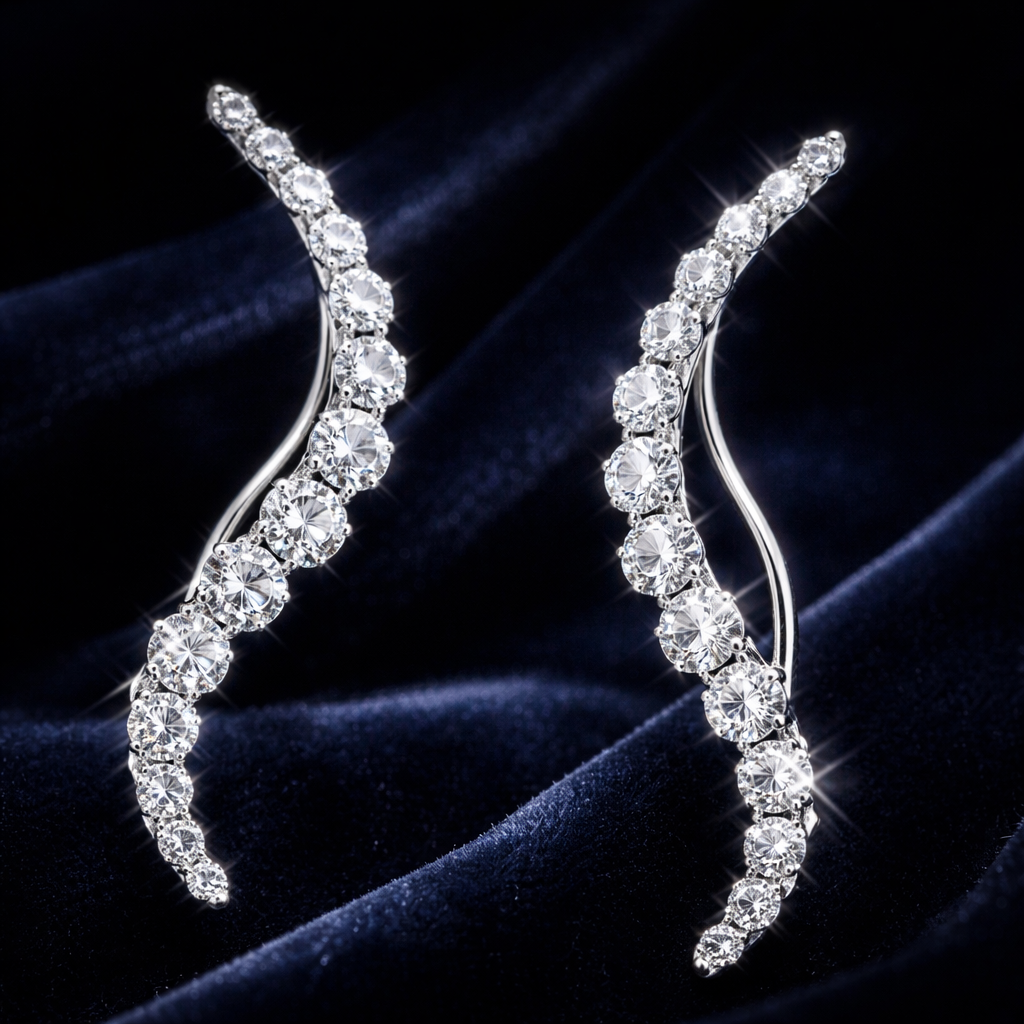
Care and sizing: helix earrings demand careful measurement and delicate handling. Clean with a soft cloth and a mild solution, and periodically check the closure to prevent loss. In our experience, a secure backing and a post length that sits snugly on the ear edge keeps the curve aligned with your jawline, flattering many outfits.
Ready to start? Explore diamond helix earrings in 18ct gold or platinum in our Swiss-designed range — they’re crafted to be timeless, affordable luxury for women in the United Kingdom and beyond.
Care, maintenance, and diamond quality basics
Let me be completely honest: keeping diamond helix earrings sparkling and secure isn't complicated, but it does help to have a simple routine you actually follow.
In our experience, a small daily habit goes a long way: gentle cleaning, careful storage, and a quick check of the closures before you head out the door.
Cleaning and daily care
Clean after wearing with warm water and a mild soap, using a soft brush or cloth to lift oils from the curve. Rinse well and dry with a lint-free cloth. Avoid harsh chemicals, chlorine, and ultrasonic cleaners unless your jeweller says it's okay for your specific piece.
Store each pair in a soft pouch or a dedicated box to prevent tangling with other jewellery. After a shower or gym session, gently wipe away sweat and moisturisers; your diamonds will thank you for staying luminous.
Maintenance, sizing, and wear habits
Check the backings and posts monthly. A secure backing stops loss when you move through a busy day in the United Kingdom. If your helix sits higher on the ear, choose a shorter post to minimize wobble. Keep a spare set of backs handy, especially for wedding jewellery or all-day wear.
Even with the best materials, hardware wears. In 2026, our customers report that a quick professional check every 12 months keeps the curve aligned and the stone firing on all cylinders.
Diamond quality basics on a curved line
The four Cs—cut, colour, clarity, and carat—still guide you, but how they read along the curve matters. A well-cut diamond will sparkle along the bend, while color can read warmer as light travels along the arc. Carat weight scales with perceived size, but on a helix, a smaller carat can look dazzling if the cut is superb.
When you’re shopping for diamond helix earrings, the curve acts like a gentle stage for the stone. Pay attention to how light pools in the facets as you move. In our experience, a 0.5–0.75ct stone on a curved arc can appear brighter than its listed size if the cut is built for a lively play of light.
Practical tips and real-world examples
Tip: after wearing, wipe with a microfiber cloth; avoid lotions that leave a film on metal. Tip: store pieces in a soft pouch to protect the finish. Tip: before you travel, secure all closures and consider a dedicated travel case. For wedding looks, a pavé halo along the curve can amplify sparkle without overpowering your gown.
In our Swiss-designed range, we craft diamond helix earrings in 18ct gold or platinum with durable closures so they move with your day rather than against it. If you ever wonder about care specifics for your pieces, a quick chat with Cervin Blanc can tailor a routine to your ear shape and lifestyle.
For more on helix piercing considerations, see our recommended guide from Lark & Berry's helix piercing guide.
So, what should you do next? Start with a simple daily care routine, check your backs, and explore our diamond helix earrings in 18ct gold or platinum to find your perfect everyday-luxe piece.
Video: How Diamond Helix Earrings Catch Light and Move — A Visual Guide
If you’re new to diamond helix earrings, you’ll notice one thing right away: light loves the curve. The arc isn’t just decorative—it's engineered to bend and bounce, guiding sparkle along the diamond as you move.
In our Swiss-designed range, the curve is crafted to follow the ear’s natural line, so light pools where you want it most. That means even a small 0.5–0.75ct stone can read brighter as you turn your head.
Here’s how to watch the magic in action.
Step 1: Observe in natural and indoor light. Stand in front of a mirror and tilt your head slowly—notice how the light travels along the curve and dances across facets.
Step 2: Move your head and jawline. The movement of your face will pull the light along the arc, making the diamond look alive even when you’re standing still.
Step 3: Consider settings and post length. A gentle pavé halo along the curve enhances movement; a sleek curved stud with a shorter post keeps the line clean and aligned with your cheekbone.
Step 4: Secure closures matter. You want a backing that stays put through a busy day in the United Kingdom, so choose robust posts and backs that resist wobble.
In our experience, the right combination of metal and cut lets light glide along the arc—18ct gold for warmth, platinum for durability. A well-cut diamond glows along the bend; colour can read warmer as the curve guides the eye toward your lips and neckline.
For a closer look at movement, see the companion video guide. companion video guide shows the light playing along the curve from multiple angles, so you can spot the exact moments you’d want to capture in photos or videos.
If you’re shopping, start with a pair that fits your day-to-day life—daily wear, wedding jewellery, or luxury piercings—and watch how the curve holds the light through routines, celebrations, and everything in between.
Our Swiss-inspired pieces are designed to move with you, not against you. Cervin Blanc aims for timeless, affordable fine jewellery that still feels special in the United Kingdom and beyond.
Ready to explore? Browse diamond helix earrings in 18ct gold or platinum to see how Swiss design translates into motion-friendly everyday luxury.
Styling tips for different occasions
Let's be real: diamond helix earrings aren't just about sparkle. They're about rhythm—how light moves along the curve with your head turn and how that lines up with your outfit. The right styling makes the piece feel like it was made for the moment, not like you're trying too hard.
In our experience, the trick is balance. You want the curve to glow without stealing the scene from your dress or neckline. So let's walk through practical setups for different occasions you actually wear in the United Kingdom and beyond.
Everyday polish: the daily wearer's toolkit
For daily wear, keep it sleek. A single-stone helix in 18ct white or rose gold sits close to the ear and travels a gentle line along the curve. It catches light in a way that feels effortless—perfect with a cashmere sweater or a crisp white shirt. If you're in a hurry, think of it as a small punctuation mark rather than a shout.
Match the metal to your skin tone and clothing palette. Warm tones pair beautifully with rose gold; cooler looks glow with white gold or platinum. And yes, a shorter post reduces wobble, so choose pieces designed to sit neatly on the edge of the ear.
Wedding jewellery moments: understated drama
Wedding jewellery calls for quiet drama. A subtle pavé halo along the curve can elevate a simple gown without competing with a statement neckline. The curve carries light from the jaw to the shoulder, drawing eyes to your smile rather than your earrings.
Consider pairing the helix with a matching lobe stud for symmetry, or opt for a tiny opposite-lobe piece for balance. In the United Kingdom, where photography matters, this setup reads as polished and refined in photos that last a lifetime.
Evening events: glow that moves with you
For a black-tie or cocktail event, think bigger—but still in proportion. A curved pavé strand that follows the ear's edge creates a luminous arc. If the dress has a high neckline, keep the curve smaller and let the stone sparkle along a longer post that catches light away from your collarbone.
Wearing 18ct gold can warm the glow on cooler fabrics, while platinum keeps things crisp and modern. This pairing works well for wedding jewellery and luxury piercings alike.
Mixing and matching: read as intentional, not accidental
The best-looking ears often feature a tiny counterbalance. Try a delicate helix on the upper ear with a slightly larger stud. It creates a visual story: light travels along a line that begins at the face and travels past the jawline.
And what about the finish? A pavé halo or a discreet bezel adds texture without crowding the silhouette. If you're shopping, start with 18ct gold or platinum options to see how the curve performs in real life.
For more inspiration, see this styling guide: 5 ways to style diamond earrings with any outfit.
So, what should you do next? Start by assessing your wardrobe and a few existing pieces you love. Then pick a helix pair in 18ct gold or platinum and test how they move with your daily routine. Small steps, big shine.
Pricing, brands, and ethics: where to buy
Let’s get real: buying a pair of diamond helix earrings isn’t just about picking the prettiest look. It’s a quick investment in style, sustainability, and, for many of us in the UK, peace of mind that the sparkle we love didn’t come at a hidden cost. The market is split between the classic mined diamonds, the increasingly popular lab‑grown stones, and a handful of boutique brands that marry both quality and ethical sourcing.
What price range should you expect?
In 2026, a single‑stone helix in 18ct gold with a 0.5‑carat diamond can start around £600 and climb to £2,000 depending on cut, colour and clarity. If you’re leaning toward lab‑grown, the price gap shrinks – you can find a 0.6‑carat piece for roughly £650 to £1,200. The key is to look at the four Cs and the metal finish, because the metal itself can add 5–15% to the total cost.
Remember, the “real” cost is the total of the diamond, metal, and the retailer’s margin. A small, high‑clarity cut can look bigger on a helix than a larger, lower‑clarity stone, so always ask to see a comparison in person.
Brands that keep it Swiss‑crafted, not Swiss‑sourced
Cervin Blanc brings the same Swiss design ethos to helix earrings as it does to its other pieces. Their pieces are built in Switzerland with gold, platinum, and ethically sourced stones, and are priced to stay approachable for the UK market. If you’re already a fan of the brand, the helix line sits in the £1,200‑£1,800 range for a 0.6‑carat lab‑grown diamond in 18ct white gold.
For those who want a broader look, Rosec Jewels offers a wide array of helix styles that blend affordability and quality. The store’s helix collection features both mined and lab‑grown options, with prices from £500 for a 0.3‑carat cut to £2,000 for a 1‑carat solitaire. Their site makes it easy to filter by metal, cut, and ethical certification, which is handy if you’re juggling budget and conscience. Explore the range at Rosec Jewels.
Lab‑grown vs mined – which is right for you?
Lab‑grown diamonds are 100% real in terms of chemistry, but they’re produced in a controlled environment that eliminates most human‑rights concerns and reduces the environmental footprint. The cost advantage is real – a lab‑grown 0.5‑carat diamond often costs 30–40% less than its mined counterpart with similar cut and colour. Learn about ethical lab‑grown diamonds.
Still, if you value a traditional mining narrative or are looking for a specific provenance story, mined diamonds with a reputable certification like GIA can be a solid choice. Just be sure the retailer provides a clear trace of the stone’s journey from mine to market.
How to spot a trustworthy retailer
Ask for a certificate of authenticity. A GIA or IGI grading report should sit in the jewellery’s official documentation. If you’re buying online, check the site’s return policy – a 30‑day satisfaction guarantee is a good sign.
Check for transparency. Brands that openly share their sourcing practices, such as the origins of their metals and the conditions of their workers, earn extra credibility. In the UK, you can even look for the Responsible Jewellery Council seal on the packaging.
Actionable checklist for your next purchase
- Set a realistic budget and stick to it – include the cost of the metal.
- Decide whether you want a mined or lab‑grown stone and filter accordingly.
- Request a comparison of two stones side‑by‑side in the same cut and metal.
- Verify the retailer’s ethical statement and certifications.
- Ask about return policy and after‑care support.
- Consider a personalised consultation if you’re unsure about the right size or finish.
So, what’s the next step? If you’re ready to invest in a helix that feels ethical and fits your budget, start by filtering online for lab‑grown options and then reach out to a trusted retailer. If you prefer the timeless feel of a mined diamond, ask for a GIA report and a detailed supply‑chain overview. Either way, you’ll be walking around with a piece that’s as honest as it is dazzling.
Designs and quick comparison: solitaire, pavé, halo, and helix combos
We’ve already talked about how a helix earring can turn a simple moment into a conversation starter. Now let’s break down the main design options so you can pick the one that feels like a natural extension of your style.
Solitaire on a Helix
Think of the classic solitaire—one diamond, one setting—but stretched along the helix curve. It’s the most straightforward way to showcase a single stone’s fire without extra sparkle cluttering the line.
Pavé‑lined Helix
When you line the helix with tiny pavé diamonds, you get a continuous shimmer that feels almost like a ribbon of light. The subtlety is key; the diamonds work in harmony with the curve, keeping the piece elegant for everyday or bridal wear.
Halo‑Backed Helix
A halo around the central stone adds that classic “glow” effect. It’s the sweet spot between understated and eye‑catching—great for cocktail evenings or a statement on a wedding dress.
Helix Combo: Two‑Stone Sets
Some designers stack a smaller halo stone on the helix with a slightly larger solitaire on a lower post. The result is a layered look that plays with depth and movement, perfect for those who love a touch of drama without going full-on sparkle.
So, what’s the real difference when you’re deciding? The main clues are the amount of light you want, how bold you feel, and what your daily wear routine looks like.
If you’re into minimalism, the solitaire helix keeps the focus on the diamond itself. If you want that subtle sparkle that only shows up when you move, pavé or halo are the go‑to choices. For a touch of luxury that stays true to the helix’s natural flow, a two‑stone combo gives you the best of both worlds.
Does that help you picture the right look? Try holding each type against the light and feel how the cut behaves on the curve—this quick visual test can make the decision feel less theoretical and more tactile.
We’re not saying there’s one right answer; it’s all about how the piece feels in your hand and on your ear. Trust that instinct—it’s usually spot on.
To see a real range of these styles, you can browse a selection of helix jewellery at Monster Piercing, which showcases a variety of settings and metals that work well with helix designs.
Before you pick, keep in mind that the metal finish can shift the whole vibe. Rose gold gives a warm, romantic glow; white gold feels crisp and modern; platinum keeps it sharp and timeless. Pair each finish with the design that best suits your wardrobe.
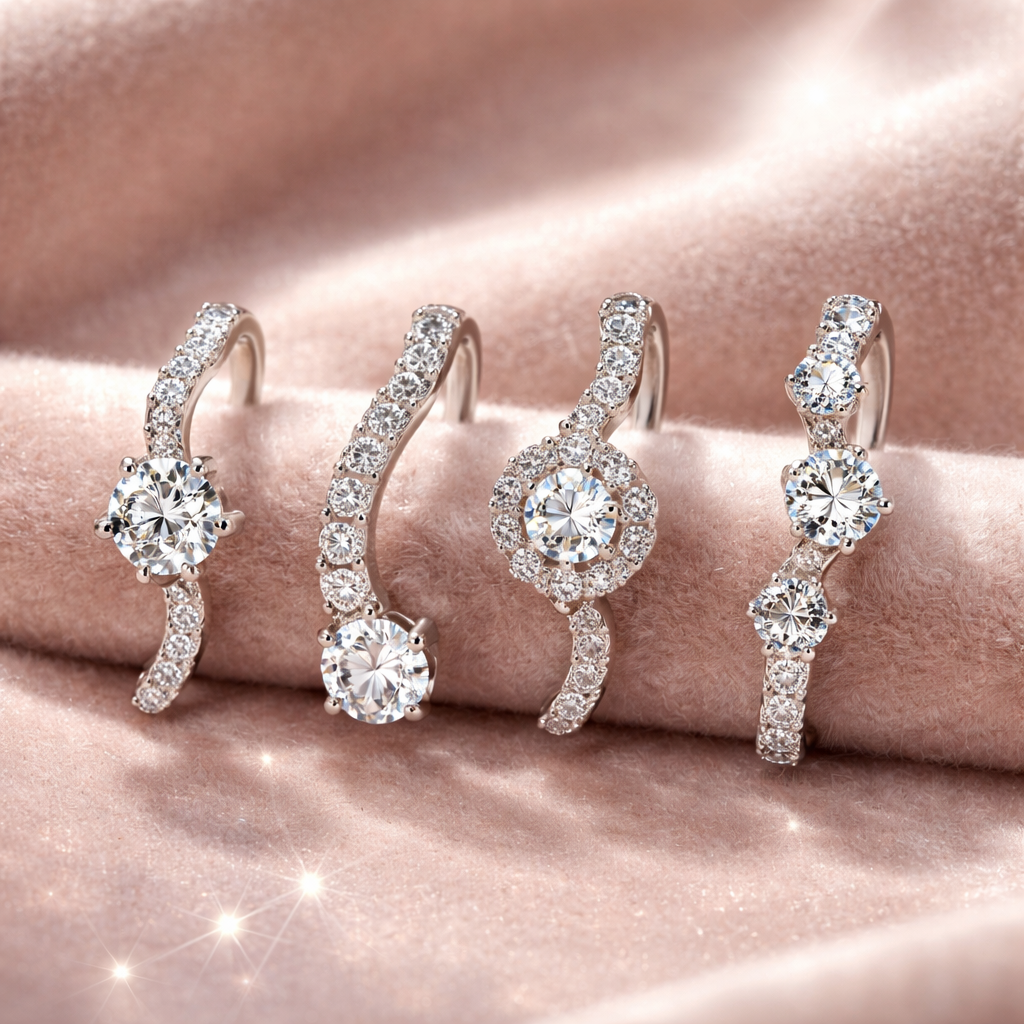
| Design | Key Features | Best for |
|---|---|---|
| Solitaire Helix | Single stone, clear setting, minimal sparkle | Daily wear, understated elegance |
| Pavé‑lined Helix | Continuous tiny diamonds, subtle shimmer | Office, casual outings, weddings |
| Halo‑Backed Helix | Central stone surrounded by a halo of diamonds | Evening events, photo‑friendly moments |
| Two‑Stone Helix Combo | Lower post solitaire with upper helix halo | Statement piece, high‑end occasions |
Remember, the best choice is the one that feels like it was made for you. Keep these points in mind next time you’re in a showroom or scrolling online: design type, metal finish, and the occasion you’re gearing up for. Then you’ll walk out with a pair that’s as honest as it is dazzling.
Conclusion and next steps
Let's be honest: choosing the right diamond helix earrings is less about flash and more about how they move with you through the day. If you've followed this guide, you've got the language and the eye to pick a piece that truly fits your life in the United Kingdom or Switzerland.
So what should you do next? Start with a quick reality check: your budget, the metal, and the setting that mirrors your everyday wardrobe. Then test a few options in person or online to see how the curve catches light from different angles.
In our experience, a well-cut diamond on a curved helix reads brighter as you move, so focus on light performance along the arc when you compare stones. A simple solitaire or a subtle pavé halo can carry you from daily polish to wedding styling without missing a beat.
Practical steps to take next
Set a budget you're comfortable with, then decide between mined or lab-grown if that matters to you. This affects price and ethics as you walk into a showroom or online cart.
Choose a finish—18ct white, rose, or yellow gold, or platinum—and pick a silhouette that matches your usual outfits. Solitaire along the curve for everyday polish, pavé halo for subtle drama at events, or a two-stone combo for a statement moment.
Check the closure and post length to ensure the piece sits securely on your ear. If you wear luxury piercings or wedding jewellery, it's worth asking about secure backs and service plans—these small details save headaches later.
Finally, consider a trusted retailer with clear provenance. For many of our UK clients, Cervin Blanc is a natural pick—Swiss-designed, ethically sourced, and built to last. A quick virtual chat can tailor options to your face shape and lifestyle.
With the right pair, your everyday style becomes a quiet, confident story.
FAQ
What is a helix piercing and how does it differ from other ear piercings?
A helix piercing sits on the outer rim of the cartilage, higher up than a lobe. It’s a cartilage piercing, so it takes longer to heal and feels a bit more firm than a lobe. Because it’s on cartilage, it can support a range of jewellery types, from subtle studs to larger hoops, giving you a lot of style options while keeping the piercings comfortable.
How long does it take for a helix piercing to heal?
Healing usually takes 6 to 12 months, because cartilage has less blood flow than soft tissue. It’s important to give the inside of the piercings time to settle before changing jewellery. The official guide on helix piercing healing times shows that waiting at least 6 months is safest before you swap to a hoop or a different style: official guide on helix piercing healing times.
Can I wear diamond helix earrings immediately after the piercing?
Not right away. Right after the procedure, you’ll need a simple barbell or a low-profile stud that won’t tug on the healing cartilage. Switching to a diamond helix right away can cause irritation or slow the healing process. Stick with a plain, hypoallergenic piece until the inner part is fully settled.
What type of jewellery is safest for a healing helix?
Start with a 16‑gauge titanium or surgical steel barbell. These metals are hypoallergenic and lightweight, which reduces pressure on the fresh cartilage. Avoid heavy gold or platinum until the piercing is fully healed, because the extra weight can pull and cause discomfort or migration.
When should I change to a hoop or a more dramatic design?
Only after the piercing has healed inside. Once the inner part looks clear and you’ve been wearing simple jewellery for at least 6 months, you can consider a hoop or a more ornate design. Still, give the cartilage a couple of weeks to adjust before moving to something that adds more bulk or movement.
What are common signs of infection or complications?
Redness that spreads, swelling, a foul smell, or discharge are red flags. If you notice these, clean the area with sterile saline and stop wearing the jewellery for a day. If the symptoms persist, visit a professional piercer or a doctor—early attention stops a mild irritation from turning into a bigger problem.
How can I keep my helix jewellery looking fresh for everyday wear?
Clean gently with mild soap and warm water after each wear, then dry with a lint‑free cloth. Store the piece in a soft pouch to avoid scratches, and keep the backing in place before bed. A quick check of the closure before you leave the house saves you from a surprise loss and keeps your ears looking polished all day long.