

Diamond cartilage earrings aren’t just a sparkle – they’re a tiny piece of art that sits right on your ear’s edge. You get the flash of a diamond without the weight of a big hoop, and that subtle shine can turn a simple outfit into something special.
Imagine a bride in Zurich choosing a delicate cartilage piece to match her veil. She picks a 0.11ct stud in white gold, because the metal lets the stone catch light from every angle. The look feels light, fresh, and totally you.
When you shop, look for a clean setting that holds the stone tight but lets you change it if you want a new vibe. A good tip is to check the post – a smooth, rounded post reduces irritation, especially if you have sensitive skin.
Our own collection shows how easy it is to mix style and comfort. For a real‑world example, see the diamond nose studs guide, which walks you through choosing the right size and caring for the metal so it stays smooth.
To keep the sparkle alive, clean the earrings with a soft brush and mild soap, then dry them gently. Avoid harsh chemicals – a little baby shampoo works fine. Store each piece in a soft pouch to stop scratches.
Looking for a matching accessory? Pair your cartilage earrings with a simple gemstone bead necklace – the gemstone beads guide shows how to pick natural beads that complement the diamond’s fire without stealing the show.
Understanding Diamond Cartilage Earrings
Diamond cartilage earrings pack a punch of sparkle without the weight of a hoop. They sit right on the edge of your ear and catch light from every angle.
The secret is the tiny post and the bezel that hugs the stone. A smooth, rounded post reduces irritation, while a low-profile setting keeps the diamond flush against the skin.
Gold choices matter too, white gold reflects the fire, yellow adds warmth, and rose gives a romantic glow. Because the cartilage is thin, a lighter metal helps the piece stay comfortable all day.
Want to see how a diamond cartilage earring looks in motion?
Cleaning is simple: use a soft brush, mild soap, and a gentle rinse. Avoid harsh chemicals; a dab of baby shampoo works fine, and store each earring in a soft pouch to prevent scratches.
For those who love active lifestyles, keeping skin health in check can make wearing cartilage studs even easier, the XLR8Well platform offers tips on nutrition and skin resilience.
Pair your sparkle with a relaxed moment over a cup from Chilled Iguana Coffee Co., because feeling good on the inside lets the diamonds shine brighter.
Next time you shop, feel the post, check the setting, and imagine how the stone will move with your everyday rhythm.
A good rule of thumb is to match the stud’s length to the thickness of your cartilage, about 2 mm long usually feels secure yet invisible.
Choosing the Right Diamond Quality for Cartilage Piercings
When your cartilage earring sits just a few millimetres from the skin, the diamond’s quality can make or break the look. A dull stone will catch every eye for the wrong reason.
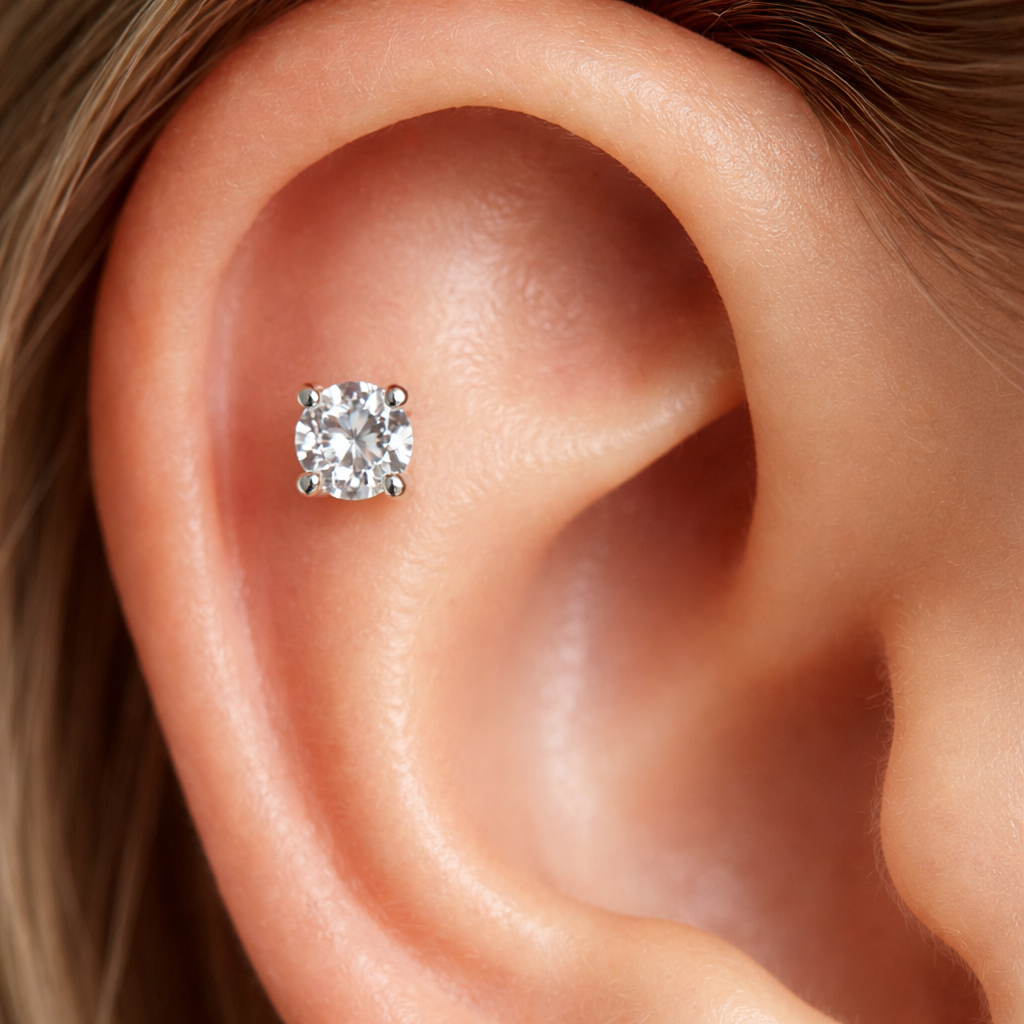
The cut is the first thing to check. A well‑cut diamond reflects light in a steady fire that stays bright even when the ear moves. Look for “ideal” or “excellent” cut grades; they give you that consistent sparkle without needing a big stone.
Colour and clarity come next. For a cartilage piece you don’t need a flawless stone; a near‑color (G‑H) and VS‑SI clarity will look clean and won’t show tiny flaws under the skin. Anything lower can start to look hazy once the metal reflects off the cartilage.
Carat size matters, but remember the ear is a small canvas. A 0.10‑0.15 ct stone fits most helix or tragus spots without looking heavy. The setting should sit low on the post so the diamond doesn’t snag hair or clothing. Check the earring’s spec sheet for “low profile” or “flush‑set” details.
If you’re open to lab‑grown stones, they give the same brilliance as mined diamonds while being easier on the budget and the planet. Lark & Berry explains why lab‑grown diamonds work well for cartilage earrings. For traditional stones, a quick read of diamond carat and cut guidelines can help you pick the right size.
Quick checklist: cut‑ideal, colour‑G/H, clarity‑VS/SI, carat‑0.10‑0.15, low‑profile setting. Follow it and your cartilage studs will stay bright from the first day to years later.
Materials & Settings Comparison: Which Is Best for Comfort and Safety?
When you pick a pair of diamond cartilage earrings, the metal and the setting matter just as much as the stone.
Gold that’s at least 14 karat feels warm on the skin and rarely triggers irritation. It’s heavy enough to stay put, yet soft enough to bend a little if you catch it on hair. Many women in Switzerland and the UK swear by solid gold for their first cartilage studs.
And if you’re after something lighter, titanium is a top pick. It’s hypo‑allergenic, won’t rust in the sea, and stays smooth even after months of wear. Angara explains which metals are best for sensitive cartilage.
For a budget‑friendly option, surgical stainless steel works well, but look for “low‑carbon” grades that won’t leach nickel. Cheap plated pieces can lose their coating and cause redness.
Now the setting. A low‑profile, flush‑set stud keeps the diamond close to the cartilage and reduces the chance of snagging. Flat‑back push‑pull backs are the gold standard for healing piercings.
Lab‑grown diamonds give the same fire as mined stones while keeping the cost down, and they pair nicely with any of the metals above. Lark & Berry notes that lab‑grown diamonds are safe for cartilage earrings.
Quick look‑up table:
| Material | Comfort | Safety |
|---|---|---|
| 14k solid gold | Warm, slight weight | Very low allergy risk |
| Titanium | Light, cool to touch | Hypo‑allergenic, corrosion‑proof |
| Surgical stainless steel (low‑carbon) | Medium weight | Good if nickel‑free, watch coating |
| Lab‑grown diamond (any metal) | Same as metal choice | Ethical, same durability as mined |
Pick the metal that feels right for your skin, then choose a low‑profile, flat‑back setting. That combo gives you sparkle without the sting.
Remember to check the post is smooth and rounded – a rough edge can rub and cause irritation over time.
A simple test is to slide the earring across your forearm; if it feels snag‑free, it’ll likely behave the same on cartilage.
Styling Tips: Matching Diamond Cartilage Earrings with Your Look
Diamond cartilage earrings can change a look in an instant. They sit close to the skin, so the sparkle feels personal. You don't need a big hoop to make a statement.
If you love gold, stick to one tone. A white-gold stud pairs naturally with a silver chain, while yellow-gold adds warmth to earth tones. The metal you choose should echo the rest of your jewellery, otherwise it can look mismatched.
Think about the shape of your stone. A round brilliant catches light from every angle, perfect for a casual tee. A pear or marquise cut adds a hint of drama for a cocktail dress. Choose a shape that mirrors the silhouette of your outfit.
Layering works better when you keep the ear stack simple. A tiny huggie in the same metal as your stud creates a line that leads up the cartilage. Add a single bead or a thin chain in the same colour for a balanced feel.
Day to night? Swap the backings. A flat-back stud stays put for work, while a screw-back adds extra security for dancing. The same piece can feel relaxed at brunch and elegant at a wedding.
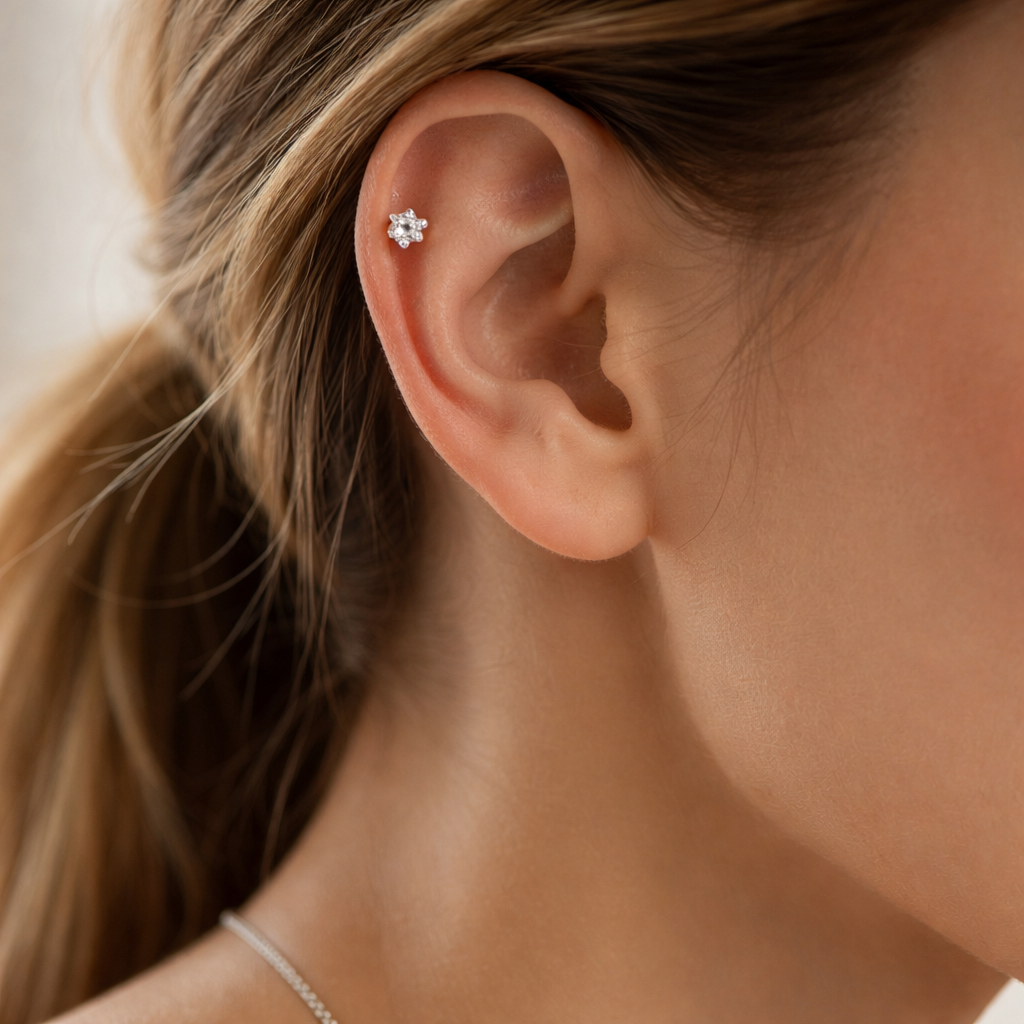
For more ideas on mixing cuts and metals, check out VRAI’s guide to styling cartilage piercings. It walks you through pairing shapes, tones, and stack options without over-complicating things.
Aftercare and Longevity: Keeping Your Diamond Cartilage Earrings Sparkling
Keep your diamond cartilage earrings shining for years by treating them like a tiny treasure.
First, clean them twice a day with mild soap and a soft brush. Warm water, a drop of baby shampoo, and a gentle rub will lift skin oils without hurting the metal.
For a quick guide on cartilage aftercare, check out proper cartilage aftercare article.
Never reach for bleach, glass cleaner or any harsh chemicals – they can eat away at the gold or titanium and dull the stone.
DiamondStuds also shares a simple soap‑and‑water method that works great for everyday sparkle.
When you sleep, avoid pressure on the fresh pierce. A “U” shaped pillow keeps the ear out of the mattress and reduces swelling.
Keep hairspray, perfume or lotion away from the earring until the skin is fully healed. Those products can leave a film that looks dull.
When you’re not wearing them, store each earring in its own soft pouch or a cloth‑lined box. This stops scratches and keeps dust away.
If the post feels tight or you notice a small bump, don’t try to pull it off yourself. Visit your piercer to have the piece adjusted – pulling can close the wound and trap infection.
Follow these steps and your diamond cartilage studs will stay bright from the first day at the wedding to every coffee run after.
Conclusion
Diamond cartilage earrings give you a tiny flash of luxury without the weight of a hoop.
When you pick the right metal, a smooth post, and a low‑profile setting, the sparkle stays bright for years.
Our Swiss‑crafted pieces, like the 0.11 ct stud in white gold, blend clean design with skin‑friendly metal, so they feel as natural as a whisper.
Keep them clean with mild soap, store them safely, and let them heal fully before swapping, that simple routine keeps the fire alive.
So, whether you’re walking down the aisle in Zurich or heading to a brunch in London, let your earrings do the talking.
Explore our collection and find the pair that fits your style.
Remember, a gentle touch and patience are the best tools, the sparkle will reward you long after the ceremony ends.
Ready to add that subtle shine? Browse our diamond cartilage range and let us help you pick the perfect piece.
FAQ
What are diamond cartilage earrings and how are they different from regular studs?
Diamond cartilage earrings sit on the thin edge of your ear rather than on the lobe. The post is short and the stone sits close to the cartilage, so the piece feels light and the sparkle stays near your skin. Unlike regular studs that hang lower, cartilage studs don’t catch hair or clothing as easily, making them a subtle yet elegant option for everyday wear or special events.
Is it safe to wear diamond cartilage earrings right after a fresh piercing?
If your cartilage is still healing, it’s best to wait before adding any jewelry. Most piercers recommend at least three months of steady wear before swapping studs. This gives the tissue time to close around the post and reduces the chance of infection. When you do start, choose a smooth, nickel‑free post and keep the diamond low‑profile so it won’t snag.
How often should I clean my diamond cartilage earrings?
Cleaning your diamond cartilage earrings twice a day keeps the metal bright and the stone clear. Use warm water, a drop of baby shampoo or mild hand soap, and a soft toothbrush. Gently brush around the post and the setting, then rinse and pat dry with a lint‑free cloth. Avoid harsh chemicals, as they can wear down the plating or dull the diamond’s fire.
Can I wear diamond cartilage earrings in the shower or while swimming?
You can wear diamond cartilage earrings in the shower, but try to keep them dry as long as you can. Water softens soap residue and can let tiny particles sit on the metal, which may cause irritation later. Swimming in chlorinated pools or salty sea water is riskier; the chemicals can wear the coating and make the post feel rough. Rinse and dry them promptly after any dip.
What metal is best for sensitive skin?
For sensitive skin, look for 14k or 18k solid gold, titanium, or surgical‑steel that is low‑carbon and nickel‑free. Gold feels warm and rarely triggers a rash, while titanium stays cool and is hypo‑allergenic. If you prefer a lighter weight, titanium is a top pick. Always check that the post is rounded, not sharp, because a rough edge can rub the cartilage and cause redness.
How do I choose the right diamond size for my cartilage?
When you pick a diamond size, think about the space on your cartilage. A 0.10‑0.15 ct stone fits most helix or tragus spots without looking heavy. Measure the hole or ask your piercer for the gauge; a 16‑gauge post works well for many women in the UK and Switzerland. Choose a low‑profile, flush‑set setting so the diamond sits close to the skin and won’t catch hair.